Watercolor Supplies
Best Watercolor Paint for Beginners: Tubes, Pans, and First Colors
Published February 27, 2026 · Updated March 15, 2026 · 9 min read
Why watercolor paint quality matters more than in other media
Watercolor is transparent: there is no white paint to cover mistakes (white is the paper showing through). That means pigment quality is immediately visible — weak, chalky student paint produces flat, lifeless washes that no amount of skill can fully rescue. Where a beginner can get away with cheap acrylic, cheap watercolor fights back.
This does not mean you need the most expensive paint. It means you should buy the best student-grade watercolor you can afford, or a small set of artist grade, rather than the cheapest set on the shelf.
Tubes vs pans
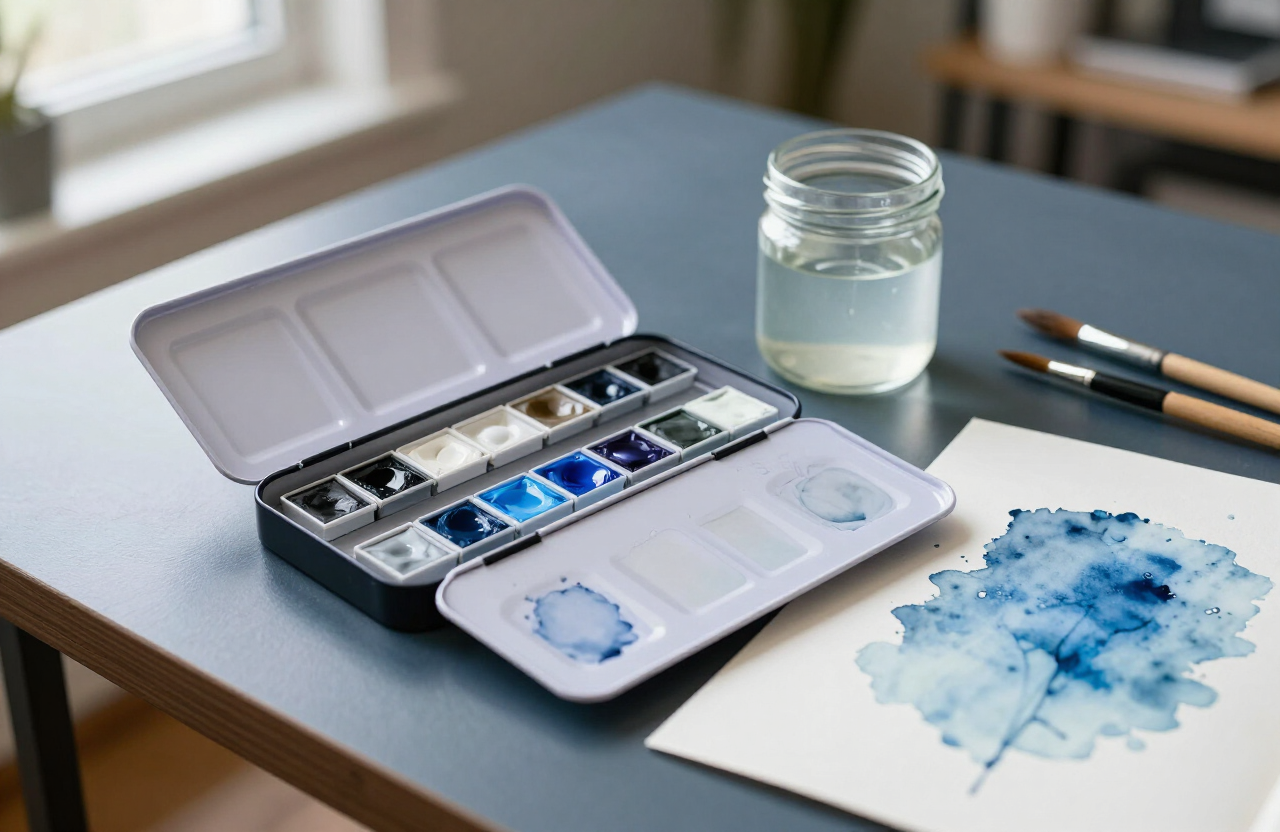
Tubes hold wet paint you squeeze onto a palette; pans are dry cakes you wet with a brush. Pans are portable, tidy, and ideal for sketching and travel. Tubes are more economical per milliliter and better for larger washes and studio work, because you can squeeze out plenty of paint at once.
For a beginner who paints at a desk, tubes offer better value and control. For a beginner who wants to paint outdoors or in a sketchbook, a pan set is more practical. You can also let tube paint dry in a palette and use it like pan paint — many artists do exactly that.
Student vs artist grade watercolor
Student watercolors (Cotman by Winsor & Newton, Van Gogh) replace some pigments with equivalents and use less of them, so colors are slightly less intense and a little less lightfast. They are genuinely good for learning. Artist-grade watercolors (Winsor & Newton Professional, Daniel Smith, Schmincke) use single-pigment formulations that mix more predictably and last longer.
Our recommendation for beginners: a 12-color student set to learn mixing, then replace colors one at a time with artist grade as you learn which you use most. This is more economical and more educational than buying a 24-color artist set on day one.
The colors to buy first
A beginner watercolor palette needs a warm and cool version of each primary, plus a couple of workhorses: ultramarine blue and phthalo or cerulean, cadmium or pyrrole red and a rose, cadmium or hansa yellow, plus burnt sienna for darks and earth tones. From these you can mix almost any color.
Avoid buying black — watercolor blacks look flat and dead. Mix darks from ultramarine and burnt sienna instead; they produce rich, lively darks that make black paint look lifeless by comparison.
Paper matters as much as paint
Even the best watercolor paint fails on the wrong paper. Watercolor needs 100% cotton paper at 300 gsm (140 lb) to handle washes without buckling and to allow lifting and layering. Cheap wood-pulp paper pills and warps. Our best watercolor paper guide covers this in depth, and our best sketchbooks guide names sketchbooks that take washes well.
The picks, in one place
Our tested recommendations
- Winsor & Newton Cotman watercolor 12-color set
The dependable student-grade set — good enough pigment to learn real mixing without the artist-grade price.
Check price on Amazon - Daniel Smith Essentials introductory set
Artist-grade, single-pigment colors that mix predictably — the upgrade path once you outgrow student paint.
Check price on Amazon
Frequently asked questions
Keep reading
Canvas & Paper
Best Watercolor Paper: Cotton, Weight, and Press Explained
Watercolor paper is the single biggest factor in whether your painting succeeds. This guide covers cotton vs cellulose, cold vs hot press, and the weights that handle washes without buckling.
Read the guide
Drawing Supplies
Best Sketchbooks for Artists: Tested Picks for Every Medium
We filled, soaked, and abused a shelf of sketchbooks to find the ones worth your drawings — organized by medium, with the paper specs that actually matter.
Read the guide
Drawing Supplies
Best Art Supplies for Beginners: The Honest Starter Kit
A complete, tested beginner art kit for under $100 — plus the five products beginners should never buy, and the upgrade order that makes every dollar count.
Read the guide