Drawing Supplies
Best Drawing Pencils for Beginners: What to Actually Buy
Published February 20, 2026 · Updated March 12, 2026 · 9 min read
Why beginners overbuy pencils
Walk into any art store and the pencil wall implies that more grades equal better drawings. It does not. A beginner who buys a 24-pencil set usually spends the first month using two of them and feeling guilty about the rest. The grade stamped on a pencil only describes how hard or soft the graphite is — it says nothing about whether you can draw with it.
Drawing improves with mileage, not with stationery. The right beginner pencils are the ones that let you make a clean light line, a confident dark line, and everything in between, without fighting the material. That is achievable with three grades and a decent brand.
The grades a beginner actually needs
Pencil grades run from 9H (hard, pale) through HB (middle) to 9B (soft, dark). For general drawing you need roughly three: an HB for everyday marks, a 2H or H for faint construction lines you want to erase or hide, and a 2B or 4B for darks and shading. That trio covers 90% of what a beginner draws.
If you want one purchase to last, a 12-pencil set spanning 2H to 6B gives you room to grow without buying again. Avoid sets that lean entirely to one end of the scale — a tin of nothing-but-B pencils sounds rich and dark but leaves you unable to lay a light underdrawing. We explain the full grade scale in our graphite pencil grades guide.
Brands worth the money (and ones that are not)
Consistency is what separates a real pencil from a novelty one. Established manufacturers — Staedtler, Faber-Castell, Tombow, Derwent — grade their graphite consistently, so an HB from one pencil behaves like the HB that replaced it. Cheap unbranded sets are inconsistent: the same grade can be scratchy in one pencil and greasy in the next, which makes learning harder, not easier.
For a first set we recommend the Staedtler Mars Lumograph 100 in a 12-grade box. It is the pencil most art teachers reach for, the lead sharpens cleanly, and the range from 6H to 8B covers every beginner need and most professional ones. If you prefer a slightly smoother, blacker line, Tombow Mono 100 is the equal alternative.
Woodless, mechanical, or traditional?
Traditional wood-cased pencils are the right default. They are cheap, sharpen predictably, and survive a pencil case. Woodless graphite sticks are excellent for broad shading and big drawings but are fragile and messy — a later upgrade, not a first pencil. Mechanical pencils with 2B leads are great for precise line work and sketching on the go, but they cannot match the tonal range of soft wood-cased grades.
If you draw mostly in a sketchbook at a desk, start traditional. If you sketch while commuting, add a 0.5mm mechanical pencil with 2B lead as a second tool.
What to pair with your pencils
A pencil is only useful with paper and an eraser. Pair your first set with a medium-tooth sketchbook (Strathmore 400 is the dependable default) and two erasers: a kneaded eraser for lifting and a white vinyl eraser for full removal. A two-hole metal sharpener completes the kit for under ten dollars more.
Our best art supplies for beginners guide builds the full kit, and our best sketchbooks guide covers paper in depth.
The picks, in one place
Our tested recommendations
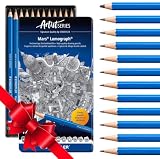 Staedtler Mars Lumograph 100 (12-grade set)
The 12-grade graphite set we recommend for a decade — 6H to 8B, consistent and clean-sharpening.
Check price on Amazon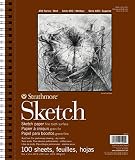 Strathmore 400 Series sketch pad, 9×12
A hundred sheets of honest medium-tooth practice paper — the right surface for graphite.
Check price on Amazon- KUM two-hole metal sharpener
A replaceable-blade sharpener that produces a better point than most electric models.
Check price on Amazon
Frequently asked questions
Keep reading
Drawing Supplies
Graphite Pencil Grades Explained: The H and B Scale
H means hard, B means black, and the number tells you how far. Here is what each grade does on paper, which ones a beginner actually uses, and the one grade almost everyone overrates.
Read the guide
Drawing Supplies
Best Colored Pencils for Artists: A Practical Buying Guide
Wax or oil, student or artist grade, 24 or 120 — colored pencils have more variables than graphite. This guide cuts to what changes your results and names the sets worth the money at each level.
Read the guide
Drawing Supplies
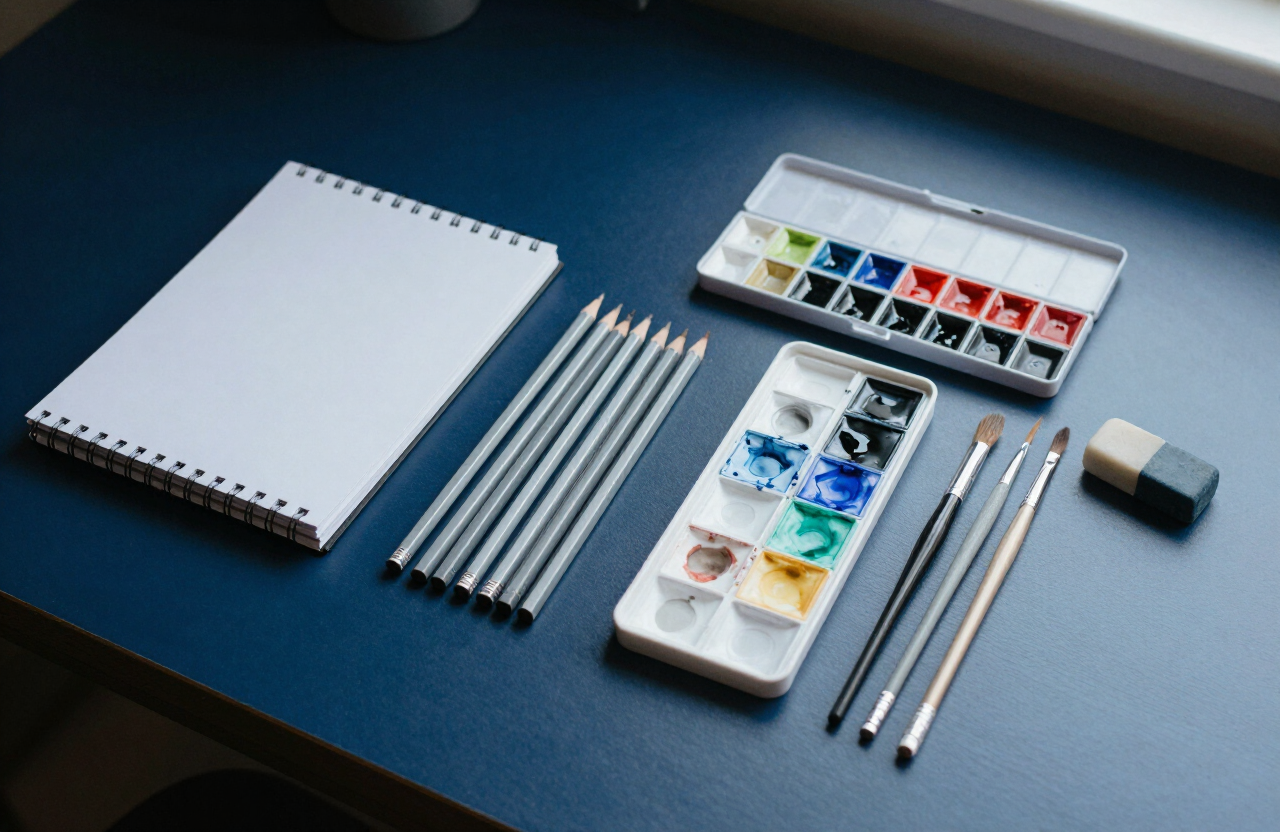
Best Art Supplies for Beginners: The Honest Starter Kit
A complete, tested beginner art kit for under $100 — plus the five products beginners should never buy, and the upgrade order that makes every dollar count.
Read the guide
Drawing Supplies
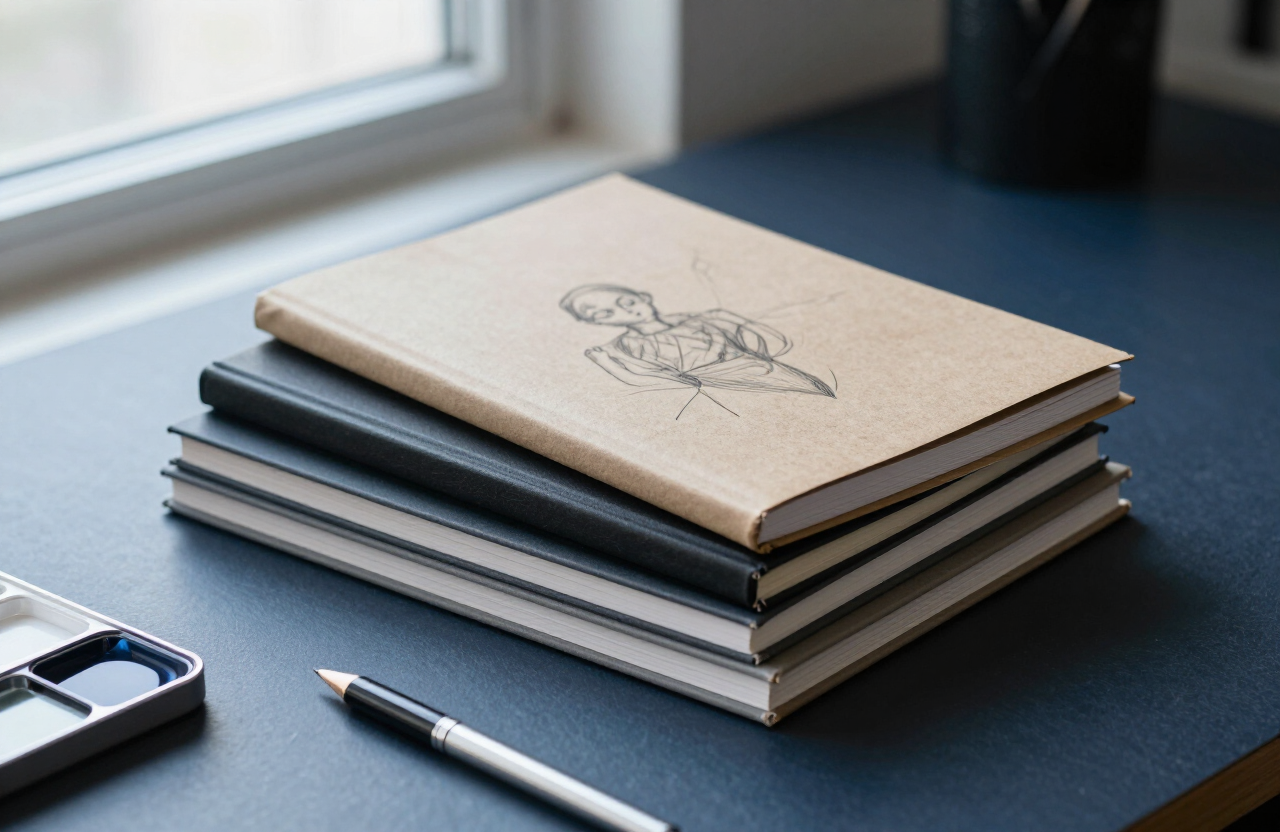
Best Sketchbooks for Artists: Tested Picks for Every Medium
We filled, soaked, and abused a shelf of sketchbooks to find the ones worth your drawings — organized by medium, with the paper specs that actually matter.
Read the guide